
Pool Fill Water Treatment in Baton Rouge, Louisiana
Your pool is filled and topped off from the same line that feeds your house. Whatever is in that water ends up in the pool, and it stays there when the water evaporates. If you are fighting brown stains or scale, the cause is often upstream of the pool entirely. We test the water going in.
Where pool problems start
A pool concentrates whatever fills it.
Water evaporates. Minerals and metals do not. Every top-off adds a little more of whatever your tap carries, and none of it leaves. A pool on iron-bearing water slowly becomes an iron concentrator, which is why the staining tends to get worse each season rather than better.
Testing the fill water is standard practice in the pool trade, not a novelty. It is simply a step most homeowners never get to, because the free testing offered at a pool store is testing the pool, not the tap.
Read the colour
Why is my pool water brown?
Almost always iron in the water that filled it. What the stain looks like narrows the cause down quickly, and it is the fastest check you can run yourself before anyone comes out.
- Brown or orange-brown
- Iron
The most common well-fill problem. Chlorine turns dissolved iron into rust, which settles on the plaster. Staining is generally reported from around 0.2 parts per million, and wells often run well above that.
- Water turns brown right after you shock it
- Iron, confirmed
Clear water that goes iced-tea brown the moment chlorine hits it is close to a signature for iron. The chlorine oxidised it all at once.
- Black, grey or purple-black
- Manganese
Iron’s lesser-known cousin, common in the same Livingston and Ascension groundwater. It stains darker and is removed the same way, provided the system is sized for it.
- White crust at the waterline
- Scale
Calcium coming out of solution and depositing on tile and equipment. On a heater it acts as insulation. The Department of Energy puts roughly one-sixteenth of an inch of scale at about a 12% loss of heat transfer efficiency.
Read this before you buy anything
A water softener should not fill your pool.
This is the part most people selling water equipment leave out. A softener is the right answer for scale inside your house. It is the wrong water for a pool.
The National Plasterers Council advises that pool fill water sit above 200 parts per million of calcium hardness, and that soft water and reverse osmosis water be bypassed when filling. Water that low in calcium does not stay low for long. It pulls calcium out of the plaster instead, and the damage ranges from discolouration to a weakened cement binder and a shorter service life for the finish.
So the first thing worth checking in a pool home is plumbing, not equipment: whether the hose bib or autofill line sits on the treated side of the softener. If it does, it should be moved or bypassed. That costs you a plumbing change, not a system.
What we actually do
We treat the supply, not the pool.
What is included
- A free in-home test of the tap water that fills your pool
- A look at a pool sample alongside it, so you can compare the two
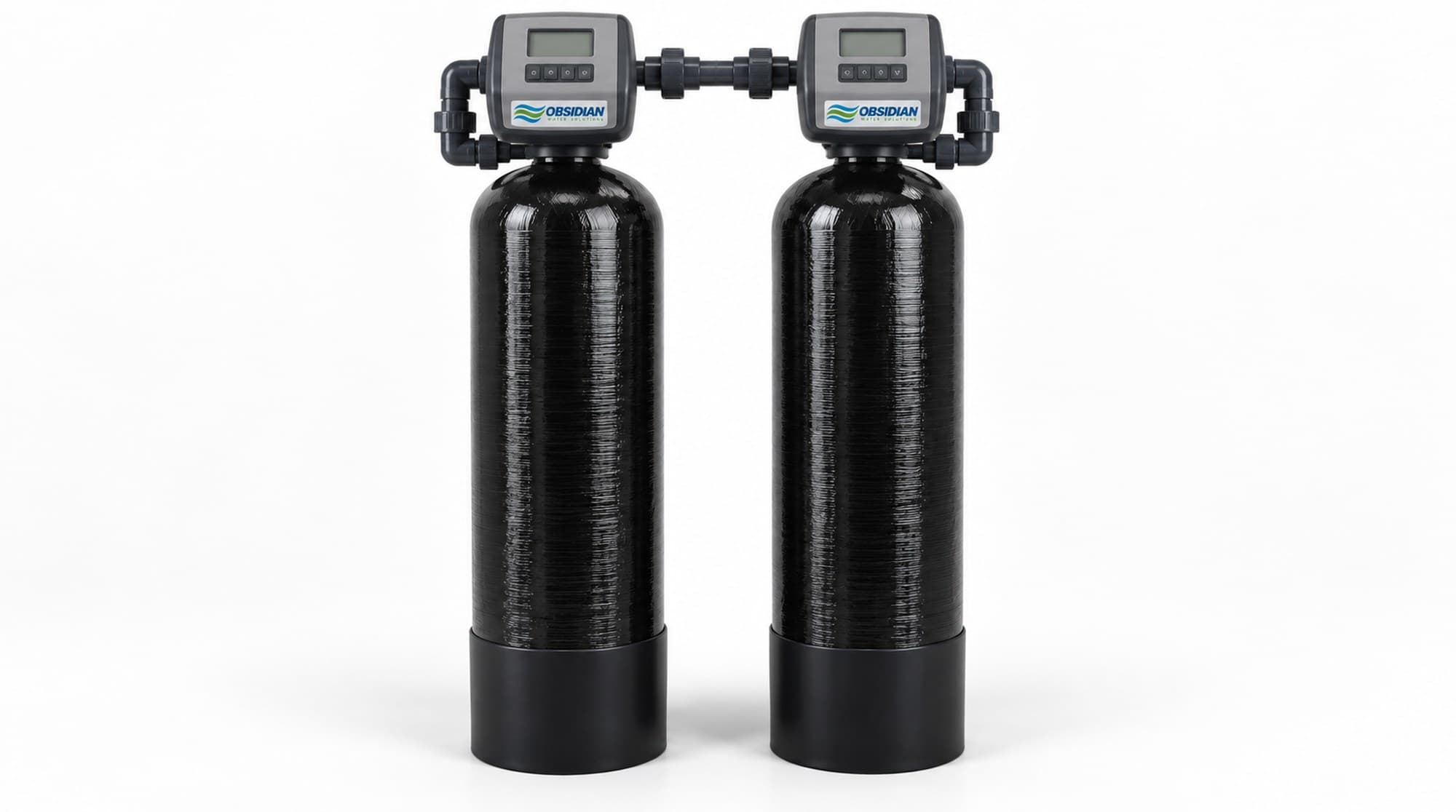
- Iron, manganese and sulfur filtration on the house supply where the test calls for it
- Checking whether your fill line sits on the treated or untreated side of existing equipment
- An itemized written quote before anything is scheduled
What we do not do
- Pool cleaning or weekly pool service
- Selling pool chemicals or balancing your pool
- Removing staining that is already on the plaster
- Resurfacing, repairs or equipment work on the pool itself
If there is staining on the surface already, a pool professional deals with the plaster. We deal with the water so it does not come back.
Two different starting points
City water and well water are not the same problem.
On the public supply
The Baton Rouge area draws from the deep Southern Hills aquifer, which the USGS describes as primarily soft sodium bicarbonate water. Soft water is easy on a house. On a pool it is worth measuring, because water low in calcium is exactly the kind that goes looking for calcium in the plaster. That is a reason to test before you fill, not a reason to panic.
On a private well
Wells across Livingston and Ascension Parish commonly carry iron, manganese and sulfur. That is the classic brown-stain pool, and it is the case where treating the supply makes the most difference. The filtration that handles it removes iron and manganese without stripping the calcium the plaster needs.
Well water treatmentWhere we work
Serving pool homes across the Baton Rouge area
Baton Rouge, Zachary, Central and Baker in East Baton Rouge Parish. Denham Springs, Walker and Watson in Livingston Parish. Prairieville, Gonzales, St. Amant and Geismar in Ascension Parish. Port Allen in West Baton Rouge Parish. If you are on a well in Livingston or Ascension and your pool stains, that is the combination we see most.
We also serve pool homes around Thibodaux and the bayou parishes, where the water arrives from a very different source. Pool fill water treatment in Thibodaux
FAQs
Pool fill water questions, answered
Why is my pool water brown?
Usually iron in the water that filled it. A pool concentrates whatever the fill water carries, because water evaporates and minerals stay behind. Chlorine then turns dissolved iron into rust, which stains plaster and can turn the whole pool a tea colour right after you shock it. Staining is generally reported from around 0.2 parts per million of iron, and private wells frequently run several times that. Testing the tap water is what tells you whether that is your cause.
Should I fill my pool through my water softener?
No. Softened water is the wrong water for a pool. The National Plasterers Council advises that fill water sit above 200 parts per million of calcium hardness, and that soft water or reverse osmosis water be bypassed when filling. Water low in calcium pulls calcium out of the plaster itself, which can cause discolouration, a weakened cement binder and a shorter service life for the finish. Filling an entire pool through a residential softener will also exhaust the resin bed. If your hose bib or autofill line sits on the treated side of a softener, it should be moved or bypassed.
Can you remove iron from my water without softening it?
Yes, and that is the right approach for a pool home. Oxidising filter media handle iron, manganese and sulfur while leaving calcium hardness alone. That matters here because the softener that solves scale in the house is the wrong thing on a pool fill line. The two jobs need different equipment, which is why we test before recommending anything.
Do you clean pools or sell pool chemicals?
No. We do not service pools, remove existing stains, or sell chemicals. We work on the water supply feeding the pool. If your pool already has staining, a pool professional handles the surface, and we deal with the source so it does not come back. Your pool store will test your pool water for free. What generally goes untested is the water going into it.
Is Baton Rouge tap water hard or soft for a pool?
The Baton Rouge area draws from the deep Southern Hills aquifer, which the USGS describes as primarily soft sodium bicarbonate water. For a house that is good news. For a pool it is worth measuring, because water low in calcium is the kind that can go looking for calcium in the plaster. Published figures vary and most of the ones claiming the water is hard come from companies selling softeners, so we would rather measure yours than quote a number at you.
What does the test cost?
The in-home water test is free and there is no obligation to buy. We test the tap water that fills the pool and can look at a pool sample alongside it for comparison. If your water does not need treatment we will tell you that.
Find out what is filling your pool
One short visit. We test the tap water that fills your pool, look at a pool sample beside it, and tell you whether the water is your problem. Free, and no obligation to buy.